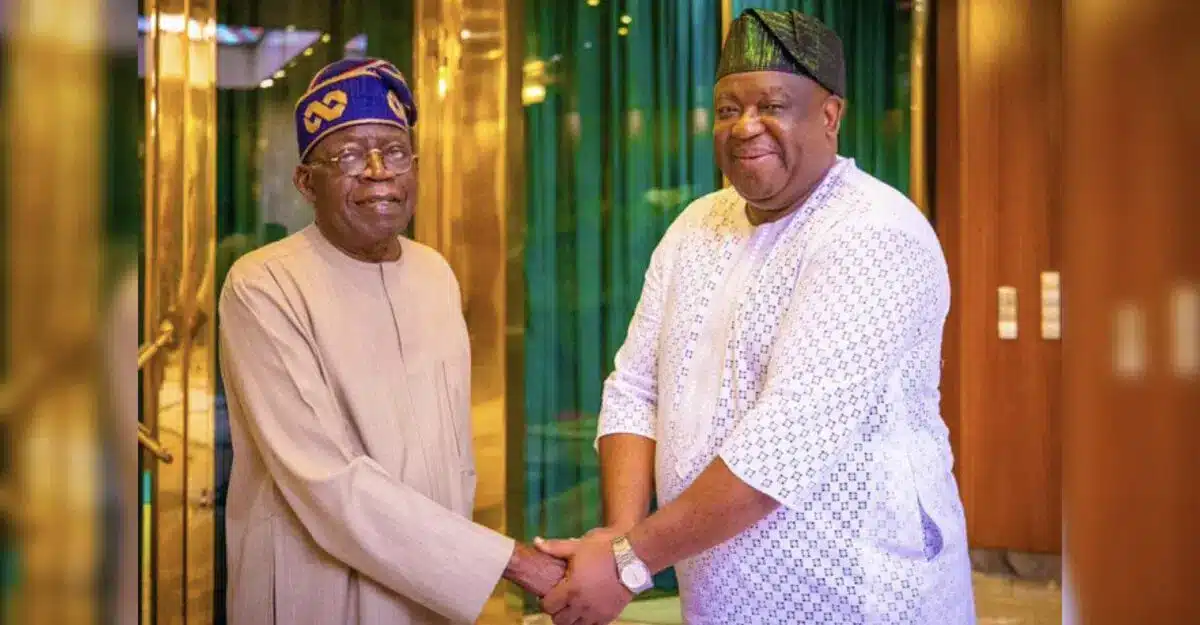
In a major political development in Nigeria’s North-Central region, Governor Caleb Manasseh Mutfwang of Plateau State has formally defected from the Peoples Democratic Party (PDP) to the ruling All Progressives Congress (APC). The move, completed at an official ceremony in Jos, marks a significant shift in the political landscape ahead of the 2027 general elections and has generated national conversation about party realignments, governance, and political strategy across the country.
Mutfwang’s defection attracted widespread attention from political analysts, party stakeholders, and residents of Plateau State, as it not only reshapes local political dynamics but also contributes to a growing list of notable defections from the PDP to the APC in recent months.
Transition Confirmed: Official Ceremony and Presentation of APC Membership
On January 2, 2026, Governor Mutfwang formally received his All Progressives Congress (APC) membership card during a stakeholders’ meeting held in Jos, Plateau State’s capital. The card was presented to him by Rufus Bature, the state APC chairman, in the presence of prominent party leaders and supporters.
At the event, Mutfwang emphasized that his decision to join the APC was motivated by his commitment to purposeful leadership and the aspiration to enhance development outcomes across Plateau State. He urged citizens to embrace unity and collective progress, describing the defection as a “journey of faith” that he believes will benefit the state and its people.
Political Context: From PDP Governorship to APC Realignment
Governor Caleb Mutfwang, a lawyer and politician, was elected as Plateau State governor in 2023 under the PDP platform, winning a competitive gubernatorial election that saw him succeed former APC governor Simon Lalong.
However, recent months witnessed political maneuvering and speculation surrounding his political future. Before the official defection, the APC’s National Chairman, Nentawe Yilwatda, had announced Mutfwang’s anticipated move during the party’s caucus meeting in Abuja in December 2025, a declaration that was initially met with political debate and mixed reactions.
Subsequently, in late December 2025, Mutfwang formally tendered his resignation letter from the PDP, signaling his intent to fully align with the APC. The letter, dated December 29, 2025, was addressed to the ward chairman of his PDP ward in Mangu Local Government Area, confirming his official disengagement from the party under which he was elected.
Responses From Political Parties
APC Welcomes Mutfwang
The APC, eager to consolidate political power ahead of future elections, warmly welcomed Governor Mutfwang’s defection. Party leaders described his move as a strategic gain for the ruling party, especially in the North-Central geopolitical zone , highlighting the opportunity to unify governance efforts across states under APC leadership.
APC officials portrayed the defection as a positive step for Plateau State’s development, emphasizing collaboration with the federal government and stronger policy alignment under the ruling party’s platform.
PDP Raises Concerns Over Procedural Issues
In contrast, the PDP maintained that Mutfwang was still technically a member because, according to the party, it had not officially received any formal resignation letter at the time of initial reports. A PDP spokesperson insisted that without formal documentation, the governor remained a member of the PDP and that symbolic statements alone could not determine his party status.
This stance sparked political debate, with some PDP officials questioning the procedural authenticity of the defection announcement and urging respect for party constitutional processes.
Mutfwang’s Statement: Vision, Development, and Political Unity
In his address to supporters and APC members, Governor Mutfwang reiterated that his decision was rooted in a desire to accelerate development in Plateau State and strengthen alignment with the federal government’s developmental priorities, particularly under President Bola Tinubu’s administration.
He expressed gratitude to his former party, acknowledging the PDP for providing the platform that launched his political career, while underscoring the necessity of transitioning to a new political platform capable of delivering effective governance and service delivery.
Mutfwang also appealed for unity among Plateau residents, urging patience and cooperation as the state adapts to the political change and works toward shared goals.
Political Implications and Broader Impact
Governor Mutfwang’s defection comes amid a broader trend of political realignments in Nigeria, with several governors and lawmakers reportedly leaving the PDP for the APC in recent months. Analysts say such shifts reflect ongoing strategic calculations ahead of the 2027 general elections, with the APC seeking to solidify its dominance and expand its influence across key states.
Political observers note that Mutfwang’s move could influence electoral dynamics in Plateau State and the wider North-Central region, potentially impacting party structures, grassroots support, and coalition building as political campaigns intensify in the lead-up to national elections.
What Supporters Are Saying
Reactions from political supporters and stakeholders have been mixed:
- APC members and allies praised Mutfwang’s decision, viewing it as a boost for governance continuity and enhanced alignment with federal policies.
- Some civil society groups welcomed the governor’s emphasis on peace and inclusivity but stressed the need for transparent communication with constituents during political transitions.
- PDP loyalists expressed concern over the manner in which the defection was announced, urging political decorum and respect for constitutional party protocols.
Leave a Reply