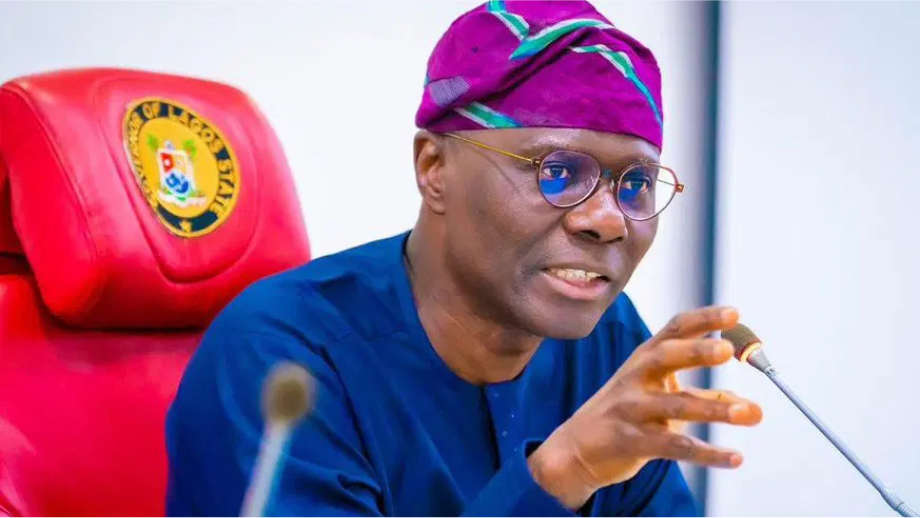
Lagos State Governor Babajide Sanwo-Olu has ordered the controlled demolition of the Great Nigeria Insurance (GNI) building on Martins Street, Lagos Island, after a devastating fire left the structure severely compromised and claimed the lives of at least eight people. The decision follows a structural assessment indicating that the high-rise has become unsafe and poses significant danger to surrounding buildings, residents, and business operators.
The fire, which broke out on Christmas Eve (December 24, 2025), engulfed the 25-storey building and extended to nearby structures, resulting in fatalities and widespread damage. As the state government accelerates recovery and safety measures, Sanwo-Olu’s directive signals a decisive response aimed at preventing further loss of life and property.
Fire Ravages GNI Building: Confirmed Casualties and Rescue Operations
Governor Sanwo-Olu, speaking at the GNI fire scene during multiple site inspections, confirmed that eight people have died in the inferno, with five victims identified and three yet to be named. The Lagos State Emergency Management Agency (LASEMA) reported that rescue efforts are ongoing, and thirteen survivors have been pulled from the rubble to safety.
An information centre has been established near the scene to assist families searching for missing loved ones and to provide updated recovery information. Emergency agencies including LASEMA, the National Emergency Management Agency (NEMA), and the Lagos State Building Control Agency (LASBCA) continue search and recovery operations.
Sanwo-Olu’s Rationale: Safety First
Governor Sanwo-Olu explained that the decision to demolish the building stems from a comprehensive structural review revealing that the intense heat and prolonged fire exposure had compromised the high-rise’s integrity. The collapse risk presents a continuing threat to shoppers, traders, and residents around the busy commercial district.
“The safety of our citizens is our primary concern,” the governor said, stressing that no business or unauthorized activity should occur within the danger zone. Streets around the affected area have been cordoned off by security and emergency personnel, and nearby buildings have been closed to protect lives while the demolition and recovery continue.
Controlled Demolition and Safety Measures
Sanwo-Olu directed that the demolition be conducted in phases and under strict safety supervision to prevent unintended structural collapses that could injure residents, traders, or pedestrians. Emergency response teams remain on site to assist with evacuation and provide relief support where needed.
Precautionary actions announced by the Lagos State government include:
- Immediate closure of adjacent shops and market corridors to safeguard traders and customers.
- Advisory for traders to relocate goods to safer locations pending demolition completion.
- Cordon and safety perimeter enforcement by security and emergency agencies
The governor pledged that demolition teams will employ controlled techniques, ensuring minimal impact on nearby structures and urban infrastructure in the densely populated area.
Structural Issues and Fire Risks
Preliminary investigations suggest that unsafe generator use, the presence of large amounts of combustible materials, and unapproved conversions of parts of the GNI building into storage or warehouse space contributed to the intensity of the blaze. Governor Sanwo-Olu highlighted that fire hazards in adjacent buildings—such as generators positioned on upper floors and shops built uncomfortably close to electrical transformers—exacerbated the disaster’s severity.
These unsafe conditions, combined with a densely constructed commercial environment, underscore ongoing challenges around building regulation enforcement and urban safety in central Lagos.
Reactions from Officials and Emergency Agencies
Officials from LASEMA, NEMA, LASBCA, and other response agencies have reaffirmed their commitment to coordinating recovery processes and ensuring that site management aligns with best safety practices. Sanwo-Olu commended their efforts, noting that recovery and demolition operations will proceed with the utmost caution to protect first responders and the public.
In a statement shared via his official X (formerly Twitter) account, the governor extended his heartfelt condolences to the families of the deceased and reiterated the government’s intention to manage the aftermath with sensitivity and resolve.
Broader Safety and Regulatory Concerns
The tragic fire and subsequent demolition order have reignited debates around the enforcement of building codes, fire safety standards, and urban planning regulations in Lagos State’s commercial zones. Experts and civic advocates have long called for stricter compliance by property owners and greater enforcement action by regulatory bodies to prevent similar disasters.
Authorities have also emphasized that this incident presents an opportunity to re-evaluate market infrastructure and safety compliance not only at Martins Street but across high-density business districts in Lagos.
Support for Affected Families and Traders
Governor Sanwo-Olu assured the public that support mechanisms will be made available to families who lost loved ones, as well as traders whose livelihoods were disrupted by the fire and demolition order. Information centres at the site are assisting affected persons, alongside relevant government agencies coordinating relief and documentation efforts.
While specific compensation frameworks have not yet been announced, the government reaffirmed its commitment to working with community leaders and stakeholders to provide necessary relief and post-demolition support where feasible.
Leave a Reply