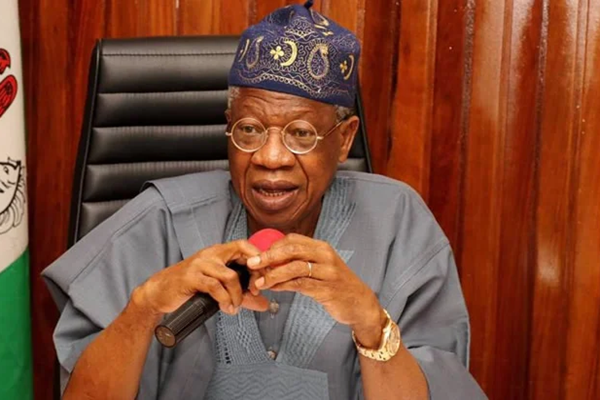
Former Minister of Information and Culture Alhaji Lai Mohammed has said he played a **strategic role in helping President Bola Ahmed Tinubu and the All Progressives Congress (APC) win the 2023 Nigerian presidential election, citing a deliberate media communication campaign deployed in the run-up to the polls. The former minister outlined his approach in his newly launched book, Headlines and Soundbites: Media Moments that Defined an Administration, which chronicles key communication efforts during his time in government.
According to Mohammed, the communication strategy was intended to shape public perception, highlight governance achievements, and counter what he described as misleading opposition narratives ahead of the vote.
Lai Mohammed’s Account of His Contribution
Mohammed explained that, aware of political narratives being shaped before the 2023 elections, he adopted a two-pronged public communication strategy. He said the aim was to systematically showcase the achievements of the outgoing administration (2015-2023) and counter opposition claims that the government lacked tangible accomplishments.
He revealed that on 18 October 2023 — exactly 130 days before the election — his ministry launched what he called the PMB Administration Scorecard Series (2015-2023). This initiative presented “verified accomplishments of the Buhari administration,” giving citizens information about policy outcomes across sectors with interactive sessions involving journalists and government officials.
How the Strategy Worked
According to Mohammed:
- The Scorecard Series provided evidence-based reports on sectoral achievements, which were interrogated by journalists in question-and-answer sessions.
- A multi-platform communication strategy was deployed, leveraging both traditional and digital media to maximise reach.
- The consistent presentation of government achievements, he said, helped shape public perception and neutralise opposition narratives that the APC government had no record of success.
Mohammed argued that this tit-for-tat approach kept the opposition “on the back foot” and ensured the APC message remained central in public discourse in the critical months before the general election.
Context: 2023 Election and APC Victory
In the 25 February 2023 presidential election, Bola Tinubu, the APC candidate, won the presidency in a tightly contested race against major rivals including Atiku Abubakar (PDP) and Peter Obi (Labour Party). The APC reportedly secured significant shares of the vote in states such as Ekiti and other southwestern states, contributing to Tinubu’s overall victory.
While national results reflected a fragmented but decisive outcome for Tinubu, communication strategies — like the one described by Mohammed — were cited by political insiders as key parts of the campaign ecosystem.
Why This Matters
Mohammed’s disclosure touches on broader debates in Nigeria about:
- The role of government communication in elections.
- Ethics and legality of public communication strategies deployed during pre-election periods.
- How voters interpret performance and achievements when making electoral decisions.
By framing his contribution in terms of performance documentation and information distribution — rather than direct party campaigning — Mohammed highlighted the intersection between governance communication and political outcomes.
Political analysts suggest that effectively presenting government achievements can influence undecided voters, especially in competitive races — although how much such strategies shift votes remains a subject of debate.
Leave a Reply