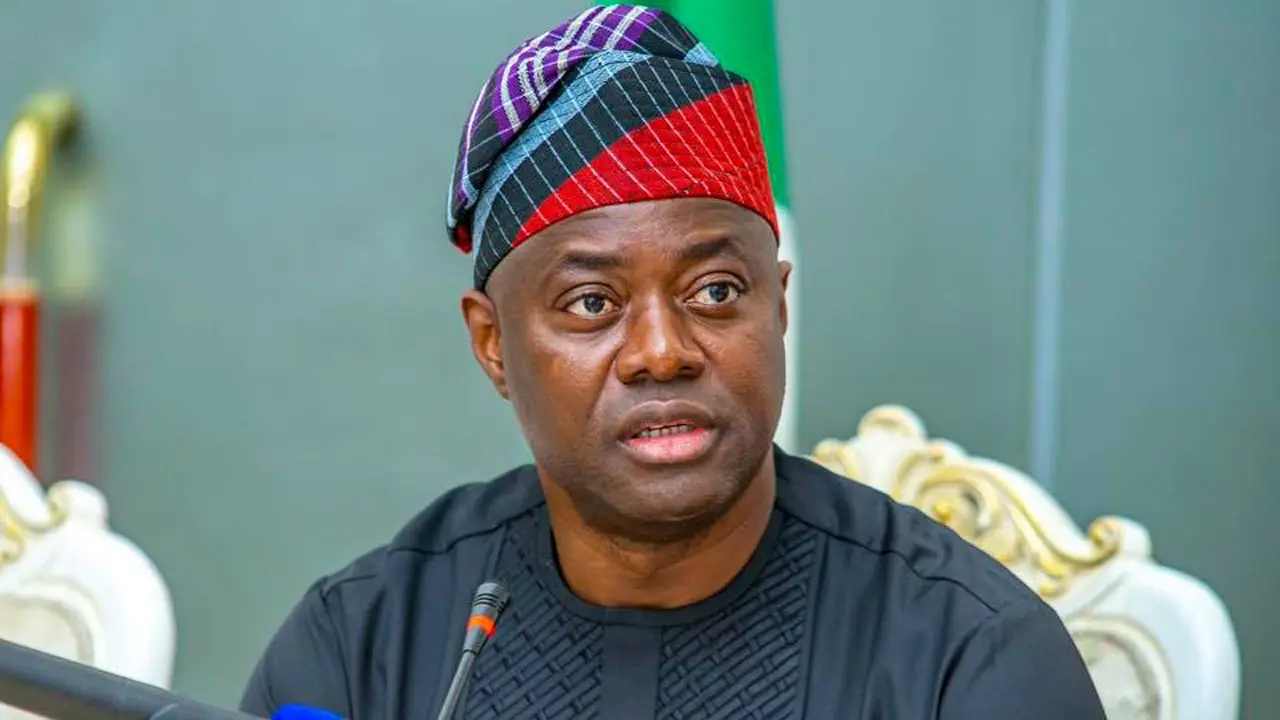
Oyo State Governor Seyi Makinde has carried out a fresh cabinet reshuffle that includes the removal of the Secretary to the State Government (SSG), Prof. Olanike Kudirat Adeyemo, and the appointment of Prof. Musibau Adetunji Babatunde as her replacement.
The development, announced in an official statement released in Ibadan by the governor’s Special Adviser on Media, Sulaimon Olanrewaju, signals a strategic retooling of Makinde’s administrative team as the government adjusts priorities for 2026.
Beyond the change at the top of the civil administration, the reshuffle also includes redeployments and new appointments that could shape Oyo’s budgeting, public works, and service delivery in the months ahead.
What Makinde Announced
According to the statement, Governor Makinde relieved Prof. Olanike Adeyemo of her appointment with immediate effect and named Prof. Musibau Adetunji Babatunde as the new SSG.
The announcement immediately became a major political talking point in the state, partly because the SSG’s office plays a central role in coordinating state government business—policy execution, inter-ministerial coordination, and administrative oversight.
Who Is the New SSG, Prof. Musibau Babatunde?
While the official statement focused on the appointment itself, multiple reports describe Prof. Musibau Babatunde as a senior professional with an academic background and public-facing administrative credibility—an appointment many observers interpret as a “competence-first” decision aimed at strengthening the state’s governance machinery.
In Nigerian state politics, SSG appointments often reflect a governor’s intent to tighten coordination, improve policy delivery speed, or reset internal performance expectations across ministries and agencies.
The Removed SSG: Prof. Olanike Adeyemo
Prof. Olanike Adeyemo served as Oyo’s SSG from 2023 and became a notable appointee given her academic and public health profile.
The government’s statement did not provide detailed reasons for her removal, but the “immediate effect” language suggests a decisive administrative change rather than a gradual transition.
Other Key Changes in the Reshuffle
Reports show the cabinet reshuffle went beyond replacing the SSG.
Redeployments
The statement also confirmed that Temilolu Ashamu was moved from the Ministry of Environment and Natural Resources to the Ministry of Budget and Economic Planning.
This redeployment is significant because Budget and Economic Planning is the engine room for fiscal strategy, capital project planning, and coordination of economic priorities—especially in a year when many states are under pressure to balance development needs with revenue constraints.
Commissioner-designate nomination
Governor Makinde also announced Ademola Aderinto, his Senior Special Assistant on Public Works, as a commissioner-designate, to be forwarded to the Oyo State House of Assembly for screening.
That choice suggests the administration may be placing fresh emphasis on public works delivery, infrastructure execution, and project supervision—areas that often determine how citizens “feel” governance on the ground.
Additional appointments reported
Some outlets further reported additional advisory appointments linked to energy/security and governance support roles as part of the broader shake-up.
Why This Reshuffle Matters
Cabinet reshuffles are not unusual—but removing an SSG is a major move because the role is central to daily governance.
Here’s why this one stands out:
1) It resets the administrative “command chain.”
The SSG coordinates ministries, tracks policy execution, and connects political decisions to civil service action. A new SSG can change the pace and style of governance—especially around approvals, inter-ministerial coordination, and project follow-through.
2) It signals a shift in priorities
Redeploying a key official into Budget and Economic Planning often points to new fiscal and development priorities—more focus on budgeting discipline, planning capacity, project sequencing, and performance monitoring.
3) It may reflect performance review outcomes
Even when governments don’t disclose “why,” reshuffles often follow internal assessments—what’s working, what’s slow, and which portfolios need reinforcement.
Political Reactions and What to Watch Next
Public reaction is likely to fall into two big camps:
- Supporters of the move may see it as leadership tightening the system for better results.
- Critics may question the rationale, timing, or whether the changes will translate into real improvements.
What matters next is what the reshuffle produces in practical terms: faster project execution, improved coordination, and clearer communication to citizens.
Key things to watch:
- whether more commissioners get reshuffled in the coming weeks,
- how the new SSG sets tone and direction, and
- whether the Budget/Economic Planning redeployment changes how Oyo funds and delivers priority projects.
Leave a Reply