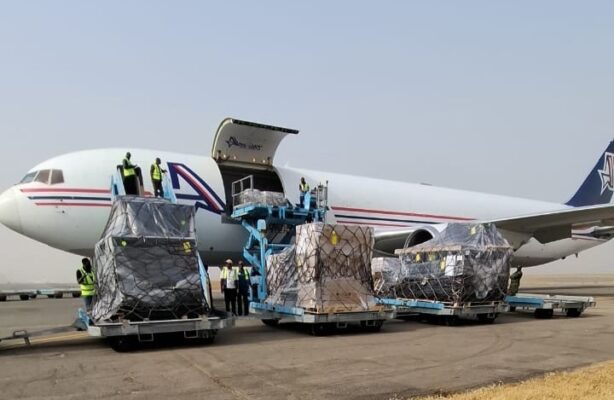
In a notable expansion of security cooperation, Nigeria has received a fresh consignment of military supplies from the United States, a move officials say will bolster the country’s ongoing fight against terrorism, violent extremism, and other security threats. The delivery — confirmed by the United States Africa Command (AFRICOM) — underscores continued collaboration between the two countries against shared security challenges.
The announcement was made public on Tuesday, January 13, 2026, in Abuja. While the exact nature of the equipment delivered was not fully detailed by AFRICOM, the supplies are part of a longstanding defence cooperation aimed at enhancing Nigeria’s operational capacity and strategic response to violent groups.
What the US Africa Command Said
AFRICOM, the branch of the US Department of Defense responsible for American military operations across Africa, posted on X (formerly Twitter) that:
“U.S. forces delivered critical military supplies to our Nigerian partners in Abuja. This delivery supports Nigeria’s ongoing operations and emphasises our shared security partnership.”
The statement highlighted the bilateral nature of the cooperation, suggesting that Nigeria and the United States remain committed to tackling terrorism and other forms of insecurity together through strategic support, intelligence sharing, and operational coordination.
Why This Supply Matters
The delivery comes at a time when Nigeria continues to face persistent threats from terrorist organisations and violent non-state actors, including Boko Haram, Islamic State affiliates, and other extremist groups across its northeastern, northwestern, and central regions. Joint security efforts and foreign assistance have been part of Nigeria’s strategy to counter these endemic threats.
This latest tranche of supplies is seen as a boost to ongoing operations and sends a message of international support for Nigeria’s security priorities. Although details of the specific equipment were not disclosed, such deliveries typically encompass logistics support, defence hardware, and specialised gear intended to enhance combat readiness and operational effectiveness.
Context: Broader Security Cooperation
Nigeria and the United States have maintained a long-standing security partnership that extends decades back, encompassing military training, intelligence cooperation, equipment transfers, and counterterrorism coordination. A 2025 report noted this alliance was valued at over $1.58 billion and included a wide range of defence and security collaboration.
Recent cooperation has included airstrikes conducted by US forces in northwest Nigeria in December 2025, in coordination with Nigerian authorities, targeting extremist groups — a move that highlighted the deepening tactical integration between the two militaries.
Reactions from Local Stakeholders
The delivery of the military supplies has been broadly welcomed by some local figures who see external support as crucial in Nigeria’s security struggle. For example, former senator Shehu Sani described the move as a timely and commendable show of partnership, urging other nations to consider similar tangible support for Nigeria’s fight against terrorism.
Sani noted that if the equipment enhances Nigeria’s ability to disrupt and dismantle violent networks responsible for kidnappings, banditry, and extremist violence, then such cooperation should be encouraged.
Security Challenges Nigeria Faces
Nigeria’s security landscape remains complex and multifaceted. Despite ongoing military operations, violent extremist groups, bandit gangs, and organised criminal elements continue to exploit under-governed spaces, particularly in the North East, North West, and Middle Belt regions. These challenges are compounded by porous borders and evolving tactics among militant groups.
Foreign military assistance — including supply of equipment, training, and intelligence — is viewed by some analysts as critical to sustaining pressure on these groups and helping Nigerian forces maintain operational momentum.
What Happens Next
Nigeria’s military will likely integrate the new supplies into its ongoing counterinsurgency and security campaigns. Although specifics on deployment timing and equipment type remain undisclosed, observers will be watching:
- How Nigerian forces employ the new equipment on the front lines,
- Whether the delivery results in measurable improvements in security operations, and
- How future US-Nigeria defence cooperation evolves in 2026 and beyond.
Given the scale of Nigeria’s security demands, sustained international support alongside domestic reforms remains central to long-term stability.
Leave a Reply