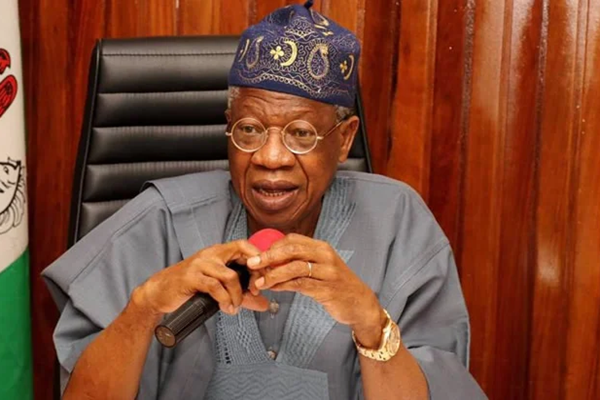
Former Minister of Information and Culture, Lai Mohammed, has opened up on the reasons ex-President Muhammadu Buhari appointed him a minister following the All Progressives Congress (APC) victory in the 2015 general election. Speaking during a recent public engagement and media interaction, Mohammed said Buhari’s decision was rooted in trust, loyalty, and his role in building and defending the APC before and after the election.
Mohammed, who served as the National Publicity Secretary of the APC before joining Buhari’s cabinet, described his appointment as a recognition of political sacrifice and consistency rather than personal ambition. His remarks have reignited public interest in the inner workings of Buhari’s first cabinet formation and the criteria that shaped key appointments in 2015.
What Lai Mohammed Said
According to Lai Mohammed, Buhari made it clear to him that the appointment was not accidental. He said the former president believed he had earned the role through years of party work, particularly during a period when the APC was still consolidating itself as a new opposition platform.
Mohammed explained that Buhari valued people who had stood by the party during difficult moments, especially when the APC faced intense political attacks, internal skepticism, and external pressure from the then-ruling party.
In his words, Buhari wanted people who were “tested, trusted, and loyal to the party’s ideals”, adding that his consistent defence of the APC in the media space played a significant role in the decision.
His Role Before 2015: APC Spokesman Years
Before becoming minister, Lai Mohammed was one of the most visible faces of the APC. As the party’s spokesperson, he was responsible for:
- responding to attacks from the then-ruling Peoples Democratic Party (PDP),
- articulating APC policies and campaign promises,
- defending Buhari’s candidacy during the 2015 election cycle, and
- helping shape the party’s national messaging.
Political analysts at the time described Mohammed as one of the party’s most combative and consistent communicators, often appearing on television and radio to counter government narratives.
Mohammed said Buhari took note of this commitment and believed that those who helped build the party’s credibility should also be involved in governance once power was won.
Loyalty and Trust as Key Factors
One of the strongest points in Mohammed’s explanation was loyalty. He said Buhari was deeply concerned about surrounding himself with people who would remain committed to his agenda and not undermine the administration from within.
According to Mohammed, Buhari believed governance required not just expertise but absolute trust, especially in sensitive positions such as information management, public communication, and national image.
As Minister of Information, Mohammed became one of the government’s most prominent voices, defending Buhari’s policies on security, economy, anti-corruption, and governance throughout the administration.
Why Information Ministry Mattered to Buhari
Mohammed explained that Buhari saw the Information Ministry as a strategic portfolio, particularly given the media environment Buhari inherited in 2015. The administration faced:
- intense domestic criticism,
- international scrutiny, and
- widespread misinformation, especially on security and economic issues.
Buhari, according to Mohammed, wanted someone who already understood the political battlefield and could articulate government policies clearly and forcefully.
That trust, Mohammed said, was built over years of political interaction rather than during the election campaign alone.
Tenure as Minister: A Defining Role
Lai Mohammed went on to serve as Minister of Information and Culture from 2015 to 2023, making him one of the longest-serving ministers in Buhari’s cabinet.
During his tenure, he:
- defended government positions during nationwide protests,
- addressed international media on Nigeria’s security challenges,
- championed the fight against fake news, and
- oversaw policies affecting broadcasting, creative industries, and cultural promotion.
Supporters say his appointment validated Buhari’s belief in loyalty and party service, while critics argue his tenure was marked by controversial statements and confrontations with the media. Either way, Mohammed remained a central figure in Buhari’s administration until the end of its tenure.
Reactions and Public Debate
Mohammed’s explanation has generated mixed reactions online. Some APC supporters see it as confirmation that party loyalty still matters in Nigerian politics, while critics argue that appointments should be based more on technical competence than political service.
Political commentators note that Buhari’s 2015 cabinet reflected a blend of technocrats, party loyalists, and long-time associates—suggesting that loyalty was one of several factors, not the only one.
Leave a Reply