5 Phones to Consider Under ₦200,000 in Nigeria (2026 Buying Guide)
You do not need to spend ₦300,000 or more to get a smartphone that can handle everyday activities. But choosing a phone under ₦200,000 in Nigeria requires more care than comparing camera megapixels or picking the model with the biggest battery.
A phone may look like a good deal because it advertises 8GB RAM, a 50MP camera and a 120Hz display. However, that advertised RAM figure might include virtual memory, the camera resolution does not tell you how good the photographs will look, and a high refresh rate does not guarantee strong gaming performance.
There is also the issue of price. The same phone can be sold at noticeably different prices depending on its memory configuration, retailer, promotion, and availability.
For this guide, I compared five brand-new smartphone options with Nigerian listings around or below ₦200,000: the Xiaomi Redmi 15C, Samsung Galaxy A07, POCO C85, Infinix Smart 20 and TECNO POP 20.
The recommendations are based on manufacturer specifications and available Nigerian retailer listings. I have not physically tested these phones or conducted controlled camera, battery or benchmark comparisons. Prices are indicative, not guaranteed nationwide selling prices.
Quick comparison: Which phones should you consider?
| Phone | Configuration considered | Main reason to consider it | Main compromise |
|---|---|---|---|
| Xiaomi Redmi 15C | 4GB/128GB | Large display and 6,000mAh battery | HD+ resolution and entry-level processor |
| Samsung Galaxy A07 | 4GB/128GB | Clearly stated long-term software support | HD+ LCD and seller-dependent price |
| POCO C85 | 6GB/128GB | 6GB physical RAM and large battery | Charger not included |
| Infinix Smart 20 | 4GB/128GB | Lower-cost everyday-use option | 8MP cameras and 10W included charger |
| TECNO POP 20 | 4GB/128GB | Affordable entry-level option | Modest camera and 15W charging |
Prices and availability are discussed below. Confirm the exact variant, condition, and seller before paying.
How I selected these phones
I used four main considerations when comparing the models:
- Price: The phone needed to have a Nigerian new-stock listing at or below ₦200,000 during the research period.
- Configuration: I considered the actual RAM and storage variant rather than relying on extended-memory advertising.
- Everyday specifications: Display, processor, battery, charging, camera, and storage were considered together.
- Practical compromises: A recommendation should explain what a buyer gains and what they give up.
I used manufacturer specification pages to verify hardware information and Nigerian retailer listings and price trackers to establish indicative prices. The prices were checked around 19–25 November 2026. A listing is not a guarantee that the same product remains in stock or that the seller’s warranty is valid.
1. Xiaomi Redmi 15C (4GB RAM / 128GB storage)
Consider this if you want a large screen and a high-capacity battery.
The Redmi 15C is one of the more straightforward options to consider if your daily phone use involves reading, watching videos, browsing websites, using social media, and communicating with friends or customers.
Its 6.9-inch display is larger than what many buyers are accustomed to on compact smartphones. Xiaomi also lists a 6,000mAh battery and 33W fast-charging support.
What you get
- Processor: MediaTek Helio G81-Ultra
- RAM and storage: 4GB physical RAM / 128GB storage
- Display: 6.9-inch HD+ LCD, up to 120Hz
- Main rear camera: 50MP
- Front camera: 8MP
- Battery: 6,000mAh
- Charging: 33W support
- Storage type: eMMC 5.1
- Software: Xiaomi HyperOS 2
Where it makes sense
The large screen is useful for reading documents, browsing, watching videos, and using applications that benefit from a wider display.
The battery capacity is another attraction. At 6,000mAh, it has a larger rated capacity than the 5,000mAh batteries found in some alternatives in this comparison.
It also supports a refresh rate of up to 120Hz. When enabled in supported applications, this can make scrolling and compatible animations appear smoother.
What you should know before buying
The display resolution is 1600 × 720, which is HD+, not Full HD+. A large screen isn’t automatically a sharper one, so buyers who frequently read small text or prefer sharper video playback should consider this compromise.
The Helio G81-Ultra is an entry-level chipset. The 4GB RAM configuration suits everyday smartphone use better than demanding multitasking or intensive gaming.
There is also an accessory detail worth checking: Xiaomi says the availability of the power adapter in the box can vary by local seller or region. Confirm what is included before paying.
Indicative Nigerian price: Jumia listings checked during research showed the 4GB/128GB version at approximately ₦169,999. Other memory configurations have different prices.
Best suited to: Everyday users, students, and people who prioritise screen size and battery capacity.
Official specifications: Xiaomi Redmi 15C.
2. Samsung Galaxy A07 (4GB RAM / 128GB storage)
Consider this if software support is a major priority.
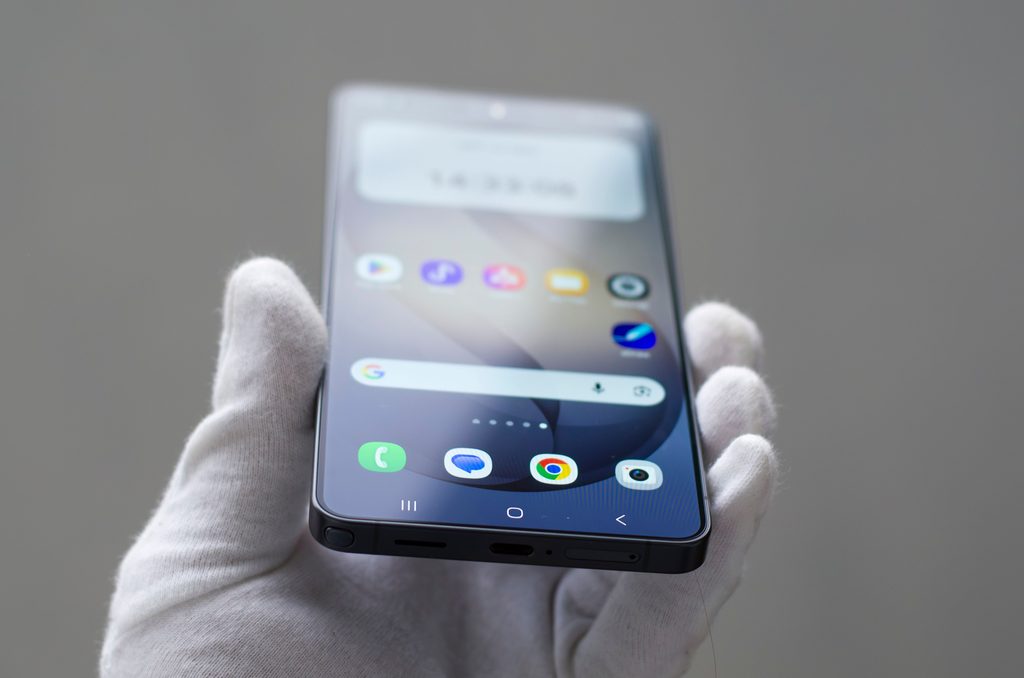
The Samsung Galaxy A07 is worth considering for buyers who want a relatively affordable Samsung smartphone and place importance on how long the manufacturer intends to support it.
One of its most useful documented features is its software-support commitment. Samsung states that the Galaxy A07 is eligible for six generations of Android OS upgrades and six years of security updates from its first global launch date.
That is more useful information for a long-term buyer than a general statement that Samsung phones are reliable.
What you get
- Model: Galaxy A07 4G
- Configuration considered: 4GB RAM / 128GB storage
- Processor: MediaTek Helio G99 for the 4G model
- Display: 6.7-inch HD+ PLS LCD
- Main rear camera: 50MP
- Front camera: 8MP
- Battery: 5,000mAh
- Network: 4G LTE
- Software support: Six generations of OS upgrades and six years of security updates, according to Samsung
Where it makes sense
The clearest reason to consider this phone is its stated update policy.
Security updates are important because they address vulnerabilities that may affect the safety of your device and information. Operating-system upgrades can also bring new features and changes to application compatibility.
For someone who intends to keep a phone for several years, this is worth considering alongside the purchase price.
Samsung also lists a 50MP main camera, but the resolution alone should not be treated as proof that it takes better photographs than the other phones in this guide.
What you should know before buying
The Galaxy A07 has an HD+ LCD rather than an AMOLED or Full HD+ panel. If display sharpness or contrast is particularly important to you, compare it with the Redmi 15C and POCO C85 before making a decision.
The 4GB RAM version is also not the configuration I would recommend for someone who regularly switches between many demanding applications.
Its price is particularly seller-dependent. Some Nigerian listings place the 4GB/128GB version below ₦200,000, while other retailers list it substantially higher. Do not assume that every new Galaxy A07 is available within your budget.
Indicative Nigerian price: A Jumia listing was observed at approximately ₦183,949 and a Konga listing at approximately ₦195,000 on 19 November 2026. Other retailers were listing the same configuration above ₦250,000.
Best suited to: Buyers who prioritise Samsung’s software environment and a clearly stated software-support commitment.
Official information: Samsung Galaxy A07.
3. POCO C85 (6GB RAM / 128GB storage)
Consider this if you want more physical RAM and a large battery.
The POCO C85 is an interesting comparison with the Redmi 15C because both phones use the Helio G81-Ultra processor family and have large 6,000mAh batteries.
The version worth examining here is the 6GB RAM and 128GB storage configuration.
That distinction matters. Six gigabytes of physical RAM is not the same as a phone advertising 6GB through a combination of physical and extended memory.
What you get
- Processor: MediaTek Helio G81-Ultra
- RAM and storage: 6GB physical RAM / 128GB storage
- Display: 6.9-inch HD+ LCD, up to 120Hz
- Main rear camera: 50MP
- Battery: 6,000mAh
- Charging: 33W support
- Storage type: eMMC 5.1
- Water and dust resistance: IP64
Where it makes sense
The 6GB physical RAM configuration gives the POCO C85 a memory advantage over the 4GB versions of some competing phones.
Its battery capacity and large display also make it worth comparing with the Redmi 15C.
For buyers who store many files, photographs, and videos, the phone supports expandable storage through a microSD card, subject to the card’s compatibility and capacity limits.
What you should know before buying
The POCO C85 and Redmi 15C share the same processor family and eMMC 5.1 storage. The POCO should not be described as dramatically faster simply because it has a different brand name.
Its HD+ resolution is another compromise to consider.
There is also an important extra cost: POCO’s official specifications state that the power adapter is not included in the box. If you do not already own a suitable charger, include the cost of a compatible 33W adapter when comparing the total purchase price.
The IP64 rating indicates protection against dust and splashes under specified laboratory conditions. It does not make the phone waterproof or suitable for immersion.
Indicative Nigerian price: A SLOT Nigeria listing was observed at approximately ₦180,900 for the 6GB/128GB version. Other tracked listings show a wider price spread, so confirm the price and availability.
Best suited to: Buyers who value physical RAM, battery capacity, and a large display, and who are prepared to purchase a compatible charger separately.
Official specifications: POCO C85.
4. Infinix Smart 20 (4GB RAM / 128GB storage)
Consider this if you want to spend less while keeping 128GB storage.
Not everyone needs to spend the full ₦200,000 on a smartphone.
If most of your daily activities involve WhatsApp, calls, browsing, mobile banking, social media, and video streaming, an affordable entry-level phone may be sufficient.
The Infinix Smart 20 is worth considering because of its 4GB/128GB configuration and lower observed price compared with some of the other phones in this guide.
What you get
- Processor: MediaTek Helio G81 Ultimate
- RAM and storage: 4GB physical RAM / 128GB storage
- Display: 6.78-inch HD+ LCD, with selectable refresh rates up to 120Hz
- Rear camera: 8MP
- Front camera: 8MP
- Battery: 5,200mAh
- Charging: 15W support
- Charger listed: 10W
- Software: XOS 16 based on Android 16
Where it makes sense
Its main attraction is the combination of a 128GB storage option, a 5,200mAh battery, and a relatively affordable price.
The large display may also appeal to people who regularly watch videos or browse the internet.
Infinix lists a 120Hz maximum refresh rate, although the display also supports lower settings. The actual refresh rate can depend on the selected display setting and application.
What you should know before buying
The 8MP rear camera is more modest than the 50MP main cameras listed for some alternatives here. Do not choose the Smart 20 expecting it to be the strongest photography option.
Its charging specification also needs attention. Infinix lists support for 15W charging but includes a 10W charger. This means the maximum supported rate and the adapter supplied are not necessarily the same.
The phone uses eMMC storage, and its entry-level processor is not a reason to expect strong performance in demanding games.
Indicative Nigerian price: Jumia’s official store listing showed approximately ₦178,159 for the 4GB/128GB version during the research period. Other Nigerian price tracking showed lower prices for the 4GB/64GB configuration. Confirm that you are comparing the 128GB version.
Best suited to: Students and everyday users who want to spend less while retaining 128GB of storage.
Official specifications: Infinix Smart 20.
5. TECNO POP 20 (4GB RAM / 128GB storage)
Consider this if you want a basic smartphone without spending the full budget.
The TECNO POP 20 is the lower-cost option in this comparison. It is not the phone I would recommend to someone whose main priority is gaming or mobile photography, but it may be sufficient for everyday smartphone activities.
The important thing is to buy it for what it offers rather than expect it to perform like a more expensive device.
What you get
- Processor: Unisoc T7250
- Configuration considered: 4GB physical RAM / 128GB storage
- Display: 6.75-inch HD+ LCD, up to 120Hz
- Rear camera: 13MP
- Front camera: 8MP
- Battery: 5,000mAh
- Charging: 15W
- Software: Android 15 listed on TECNO’s specification page
Where it makes sense
The lower purchase price is its main attraction.
If your phone use mainly involves calls, WhatsApp, mobile banking, browsing, and watching videos, there may be little reason to spend the entire ₦200,000 budget.
The 128GB storage version is worth comparing with the cheaper 64GB configuration. If you install several applications or save many photographs and videos, the extra storage can be useful.
What you should know before buying
The POP 20 uses an entry-level Unisoc T7250 processor and a 13MP rear camera. Its specifications do not establish that it will provide the same gaming or photography experience as the other phones in this guide.
Be particularly careful with its RAM advertising. TECNO lists configurations such as 128GB + 8GB, with the additional 4GB identified as extended RAM. Do not interpret the extended-memory figure as additional physical RAM.
The 15W charging support is also more modest than the 33W support offered by the Redmi 15C and POCO C85.
Indicative Nigerian price: Nigerian retailer tracking showed approximately ₦163,500 for a 4GB/128GB listing during the research period. Cheaper 3GB/64GB and 4GB/64GB versions are also advertised, so confirm the exact configuration.
Best suited to: First-time smartphone buyers and everyday users who want to keep their spending below ₦200,000.
Official specifications: TECNO POP 20.
Which of these five phones should you choose?
The right choice depends on what you value most. Here is how I would narrow the shortlist.
| Your priority | Phone worth comparing | Why |
|---|---|---|
| Large screen and battery | Redmi 15C | 6.9-inch display and 6,000mAh battery |
| Software-support commitment | Samsung Galaxy A07 | Manufacturer-stated six OS upgrades and six years of security updates |
| More physical RAM | POCO C85 | 6GB physical RAM in the configuration considered |
| Lower-cost 128GB option | Infinix Smart 20 | 4GB/128GB configuration and a lower observed price |
| Spend as little as practical | TECNO POP 20 | Lower-cost entry-level alternative |
There is no reason to choose a phone with a 120Hz screen if you would benefit more from better software support or a larger amount of physical RAM.
Likewise, a 50MP camera should not automatically win over an 8MP or 13MP camera without actual sample comparisons. Camera processing, sensor quality, lighting, and stabilisation all affect the result.
If photography is your main concern, I would compare original camera samples before making a final choice.
Five things to check before paying for a smartphone
Finding a model within your budget is only the first step. You should also confirm that the device being sold matches the specification you researched.
1. Confirm the exact RAM and storage configuration
Do not rely entirely on the product title or the figures printed in a promotional banner.
Check the actual model and configuration. A phone advertised as 8GB RAM may combine physical RAM with extended memory.
For example, 4GB physical RAM plus 4GB extended RAM is not equivalent to 8GB physical RAM.
Also confirm whether you are buying the 64GB or 128GB storage version.
2. Confirm the model number and IMEI
Check the device model in Settings and compare the information with the packaging and seller’s description.
You can display the device’s IMEI using the phone dialer code *#06#. The number should be consistent with the device information and packaging, where applicable.
Do not share your IMEI publicly. If you have concerns about the device’s history, contact the manufacturer or an appropriate verification service.
3. Test the screen, cameras and basic functions
Before accepting a device, check:
- Touch response across the entire display.
- Screen for visible lines, dead pixels, or discolouration.
- Front and rear cameras.
- Speaker and microphone.
- Charging port and cable connection.
- Power and volume buttons.
- Fingerprint sensor, if fitted.
- Wi-Fi, Bluetooth and mobile network connection.
For an online purchase, record the unboxing and inspect the device immediately in accordance with the seller’s return policy.
4. Check the charger and accessories
Do not assume that the charger supplied supports the phone’s maximum advertised charging rate.
The POCO C85, for example, does not include a power adapter according to its official specifications. Infinix lists a 10W charger for the Smart 20 while stating that the phone supports 15W charging.
Ask the seller what is included in the actual package.
5. Ask about warranty and returns
Before paying, establish:
- Whether the phone is brand-new and sealed.
- Whether the warranty is manufacturer-backed or seller-provided.
- The warranty duration and what it covers.
- Whether the seller provides a receipt.
- The return process if the device is faulty or the delivered variant differs from the order.
A slightly cheaper phone without a clear warranty or return policy may not be the better purchase.
Final thoughts
You can find a suitable smartphone under ₦200,000 in Nigeria, but the best purchase is not necessarily the phone with the largest advertised RAM figure, highest camera resolution, or fastest screen refresh rate.
The Redmi 15C and POCO C85 are worth comparing if battery capacity and screen size matter most. The Galaxy A07 stands out for its stated software-support commitment. The Infinix Smart 20 and TECNO POP 20 offer lower-cost alternatives for people whose daily activities do not demand high-end hardware.
Before making a decision, compare the exact variant across more than one seller, check the included accessories, and confirm the warranty. Prices can change quickly, and a model that fits your budget at one retailer may exceed it at another.
The sensible purchase is the phone whose verified specifications, actual selling price, warranty, and limitations match the way you intend to use it.
Research sources and price notes
Manufacturer specifications:
Nigerian price references:
- Redmi 15C on Jumia
- Samsung Galaxy A07 price comparison
- POCO C85 on SLOT
- Infinix Smart 20 price comparison
- TECNO POP 20 price comparison
Prices were observed around 19–25 November 2026. They are not guaranteed prices. Confirm current stock, exact variant, seller, warranty, included accessories, and delivery cost before purchasing.
Editorial disclosure: This article is a specification-based buying guide. The listed phones have not undergone controlled physical, camera, battery, or benchmark testing by the author. Product specifications are sourced from manufacturer documentation; prices are based on observed Nigerian retailer listings.